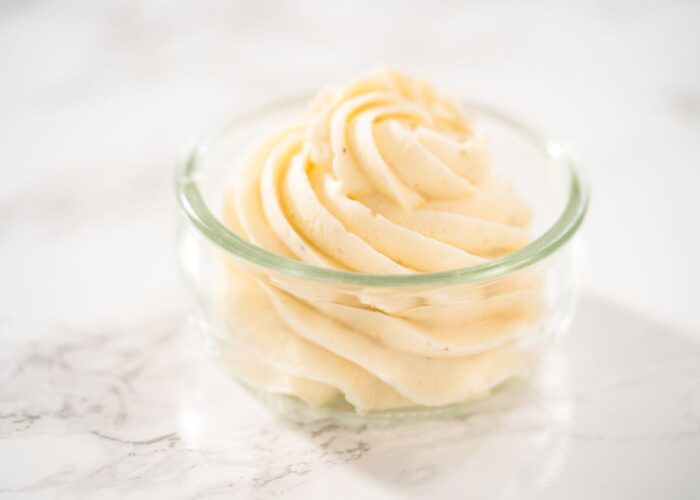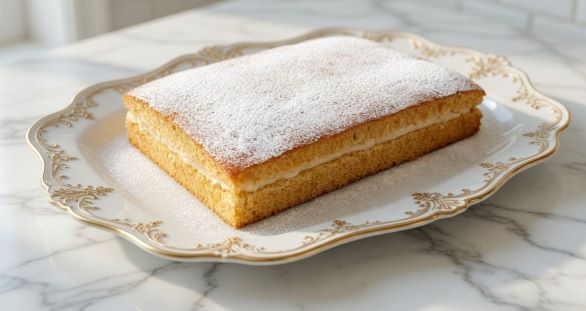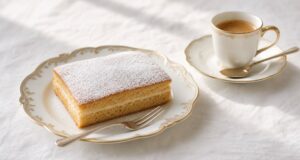
This classic Italian cake brings together layers that belong with each other. You get crisp, buttery puff pastry, soft sponge cake lightly soaked in syrup or liqueur, and a rich cream filling that melts with every bite. Bakers usually make the filling with crema diplomatica, a smooth blend of pastry cream and whipped cream. It feels light, silky, and indulgent without being heavy. Torta Diplomatica stands out because of contrast. The pastry adds crunch, the sponge brings softness, and the cream ties everything together.
Each bite feels balanced and elegant. Most of the time, a simple dusting of powdered sugar is all it needs.
A Dessert Rooted in Italy’s Pastry Tradition
Torta Diplomatica comes with history, but also with mystery. No one can agree on exactly who created it or where it first appeared. Like many Italian classics, it likely grew from home kitchens and pastry shops that refined layered desserts over time.
During the eighteenth and nineteenth centuries, layered cakes and cream-filled pastries became popular in aristocratic homes and elegant cafés. Pastry chefs pushed to create desserts that looked beautiful and tasted even better. Torta Diplomatica fits right into that tradition.
Today, you’ll find it in pasticcerie all across Italy. It often appears at birthdays, holidays, and family gatherings. Its appeal goes beyond appearance. It shows what Italian baking does best: take simple ingredients and turn them into something comforting, memorable, and worth sharing.
Typical Ingredients
- Puff pastry (pasta sfoglia)
- Sponge cake (pan di Spagna)
- Milk
- Egg yolks
- Sugar
- Cornstarch or flour
- Vanilla
- Whipping cream
- Syrup or liqueur (optional) ( Rum, Marsala, or simple sugar syrup)
- Powdered sugar
Torta Diplomatica uses simple ingredients, but each one plays an important role in the final texture and flavor. But at its core, the dessert remains true to itself: crisp layers of pastry, soft cake, and that smooth cream all working together in delicious harmony.
Ingredients
Equipment
Instructions
- Bake the puff pastryRoll out puff pastry sheets and prick with a fork. Bake at 200°C / 400°F for 12–15 minutes or until golden and crisp. Let cool completely.
- Make the sponge cakeBeat eggs and sugar until pale and fluffy. Fold in flour and vanilla gently. Bake in a lined pan at 180°C / 350°F for 20–25 minutes. Cool completely, then slice into a thin layer.
- Prepare pastry creamHeat milk with vanilla. In a bowl, whisk egg yolks, sugar, and cornstarch. Slowly add hot milk, then return to heat. Cook until thick. Cool fully.
- Make diplomatic creamWhip cold cream to soft peaks. Gently fold into cooled pastry cream. Keep chilled.
- Prepare syrup (optional)Heat water and sugar until dissolved. Let cool, then add liqueur if using.
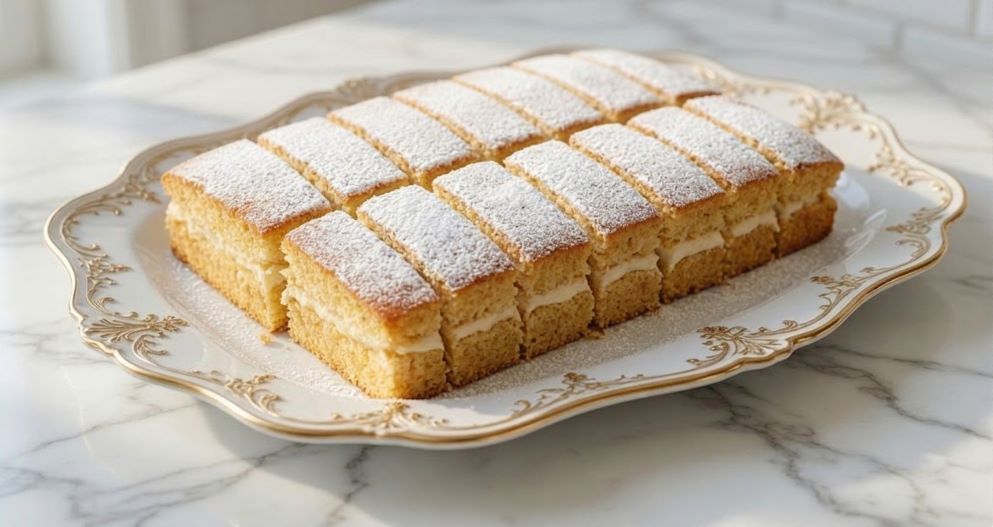
- Assemble the cakeLayer in this order:Puff pastrySponge cake (lightly brushed with syrup)Diplomatic creamPuff pastryDiplomatic creamSmooth the top and press gently to set layers.
- Chill and finishRefrigerate for at least 4 hours. Dust with powdered sugar before serving. Trim edges for a clean presentation.
Notes
| Calories | 420 kcal | |
| Total Fat | 24 g | 31% DV |
| Saturated Fat | 14 g | 70% DV |
| Carbohydrates | 42 g | 15% DV |
| Dietary Fiber | 1 g | 4% DV |
| Added Sugars | 18 g | 36% DV |
| Protein | 7 g | 14% DV |
| Sodium | 180 mg | 8% DV |
Tried this recipe?
Let us know how it was!Serving
Torta Diplomatica is best served chilled, straight from the refrigerator. This keeps the layers firm and makes it easier to slice cleanly.
Use a sharp serrated knife and cut slow, even slices so the puff pastry doesn’t crumble too much. Wipe the knife between cuts for neat, bakery-style pieces.
Serve it as a dessert after a meal, or as a special treat with coffee or espresso. It also works well for celebrations since it holds its shape nicely when fully chilled.
For presentation, keep it simple. A light dusting of powdered sugar is usually enough. If you want to elevate it a bit, you can add a few fresh berries on the side, but the cake really shines on its own.
Let it sit at room temperature for about 10–15 minutes before serving if you prefer a slightly softer cream texture.
Flavor upgrades (optional): Add citrus zest to the pastry cream, or use Marsala, rum, or limoncello in the syrup for extra depth.
Storage
Torta Diplomatica needs proper storage because it contains cream, custard, and sponge layers.
Keep it covered in the refrigerator. Use an airtight container or tightly wrap it with plastic wrap to prevent it from drying out or absorbing fridge odors.
It stays fresh for 2–3 days in the fridge. After that, the puff pastry starts to lose its crispness and the cream can soften too much.
For best texture, avoid freezing. Freezing can change the consistency of the custard and whipped cream, making the filling slightly watery once thawed.