Italian Homemade Meringata has simple, resourceful roots. It grew from the classic technique of Italian meringue. This method uses hot sugar syrup whipped into egg whites. The result is smooth, glossy, and stable.

Centuries ago, Italian cooks found smart ways to use every ingredient. Egg whites were often left over from custards or fresh pasta. Instead of wasting them, they turned them into meringue. They baked it low and slow until crisp.
Over time, these crisp layers became the base for a new dessert. Cooks added whipped cream, fruit, or frozen elements. That combination evolved into what we now call Meringata.
Meringata does not belong to one region. It appears across Italy in many forms. Each version reflects local tastes and ingredients.
In warmer areas, it often includes gelato or semifreddo. This gives it an ice cream cake feel. In cooler regions, it stays simple. Just meringue, cream, and maybe fresh berries or chocolate.
No two Meringatas look exactly the same. That is part of its charm. Meringata is all about contrast. The outer layers are crisp and light. They crack gently with each bite. Inside, the cream is soft and smooth.
If frozen layers are added, they bring a cool, refreshing element. The mix of textures makes each bite interesting. It feels airy, yet still indulgent.
Typical Ingredients
Meringata uses simple, everyday ingredients. The magic comes from how they come together.
Meringue Layers
Egg whites
Granulated sugar
A pinch of salt
A few drops of lemon juice or vinegar (for stability)
Vanilla extract (optional)
Filling
Heavy whipping cream
Powdered sugar (to sweeten the cream)
Vanilla extract
Optional
Fresh berries (strawberries, raspberries, blueberries)
Chocolate shavings or cocoa powder
Crushed nuts (hazelnuts, almonds, pistachios)
Gelato or semifreddo (for a frozen version)
Caramel or fruit sauces
A True Homemade Classic
There is no strict formula. Some versions are light and creamy. Others are rich and frozen. You can adjust sweetness, flavors, and textures easily. That flexibility is what makes Meringata a true homemade dessert.
Meringata remains a homemade favorite. It does not need perfect layers or neat edges. In fact, its rustic look makes it more inviting. Each version tells a story. It reflects what was available in the kitchen at the time. That spirit of simplicity and creativity still defines it today.
Italian Homemade Meringata proves that great desserts do not need to be complicated. Sometimes, the best ones come from making the most of what you have.
Ingredients
Equipment
Instructions
- MeringuePreheat oven to 225°F (110°C). Line baking sheets with parchment.Beat egg whites and salt until soft peaks form. Slowly add sugar, one spoon at a time. Keep beating until stiff, glossy peaks form. Mix in lemon juice and vanilla.
- Shape and BakeDivide meringue into 3 equal portions. Spread or pipe into three 8–9-inch circles.Bake for about 2 hours. The meringue should be dry and crisp. Turn off the oven and let them cool completely inside.
- Make the Cream FillingWhip heavy cream, powdered sugar, and vanilla until soft peaks form. Keep it light and fluffy.
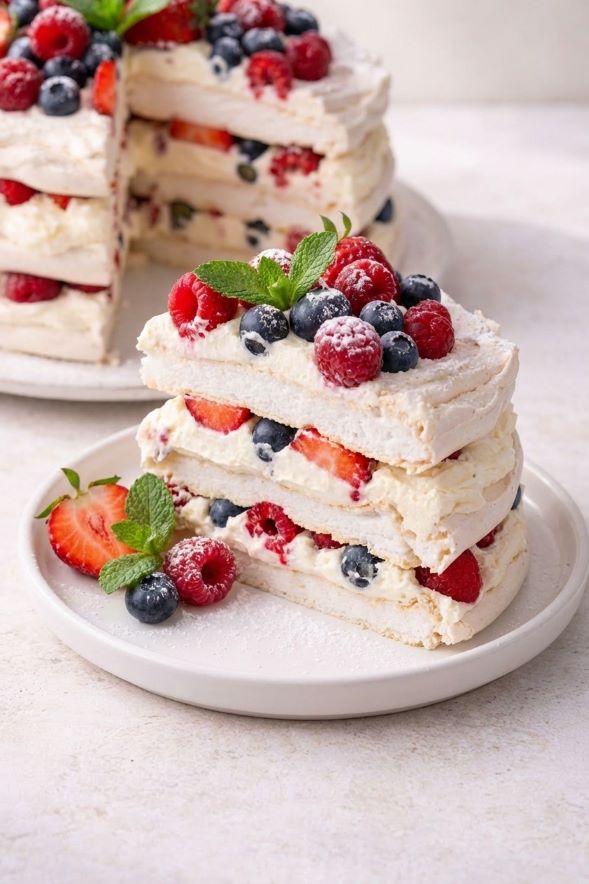
- Assemble the MeringataPlace one meringue layer on a serving plate. Spread a thick layer of whipped cream. Add berries or chocolate if using.Repeat with the second layer. Finish with the third layer on top. Cover lightly with more cream and decorate as desired.
- Chill and ServeRefrigerate for at least 1 hour before serving. Slice gently with a sharp knife.
Notes
Tried this recipe?
Let us know how it was!Variations
Classic Berry Meringata
This is the most traditional version. Fresh strawberries, raspberries, or blueberries are layered with whipped cream. The fruit adds a bright, slightly tart contrast to the sweet meringue.
Chocolate Meringata
For a richer twist, add chocolate shavings, cocoa-dusted cream, or melted chocolate drizzle between the layers. It creates a deeper, more indulgent flavor.
Lemon Meringata
Mix lemon zest into the cream or add a thin layer of lemon curd. This version feels fresh, tangy, and slightly lighter on the palate.
Coffee Meringata
Add a small amount of espresso powder or coffee extract to the whipped cream. It gives a subtle tiramisu-like flavor without being heavy.
Nutty Meringata
Fold in crushed hazelnuts, almonds, or pistachios between the layers. The nuts add crunch and a warm, toasted flavor.
Frozen Meringata (Semifreddo Style)
Layer meringue with gelato or semifreddo and freeze until firm. This version is popular in warmer months and feels like an ice cream cake.
Serving
Meringata is best served chilled but not icy. Take it out of the refrigerator about 10–15 minutes before slicing. This helps the layers soften slightly and makes cutting easier.
Serve each piece on a chilled plate for the best texture contrast. The outside should stay slightly crisp, while the cream inside remains soft and light.
Dust lightly with powdered sugar just before serving. Add a few fresh berries on the side or on top
Drizzle with chocolate or berry sauce for extra flair. Garnish with mint leaves for a fresh finish
Meringata pairs beautifully with a strong espresso or classic Italian coffee, which balances its sweetness with a bold, slightly bitter contrast. For a more indulgent experience, a glass of dessert wine like Moscato enhances the delicate vanilla and cream notes without overpowering the dessert. Fresh seasonal fruit on the side, such as berries or sliced peaches, adds a refreshing brightness and a natural tartness that lifts every bite.
For the best experience, Meringata should be served the same day it is assembled. This is when the contrast between the crisp meringue and soft cream is at its peak. Each bite feels light, fresh, and airy, making the dessert especially enjoyable right after it’s put together.
Storage
Meringata is best enjoyed fresh, but it can be stored with a little care.
Keep it in the refrigerator, covered loosely with plastic wrap or in an airtight container. This helps protect it from absorbing other odors while maintaining its structure as much as possible.
It will stay good for up to 2 days, but the texture will gradually change. The meringue will soften as it absorbs moisture from the cream. This is completely normal and expected.
If you want to prepare ahead, you can bake the meringue layers in advance. Store them in a dry, airtight container at room temperature for up to 3–4 days. Assemble the dessert only when you’re ready to serve for the best texture.
Freezing is also possible if the recipe includes gelato or semifreddo. In that case, wrap it tightly and freeze for up to 1 week. Let it sit at room temperature for 10–15 minutes before serving for easier slicing.