Italian Easter Pie Recipe, often called Easter Meat Pie (Pizza Rustica)
This rich, savory pie comes from the heart of Italy, where Easter has long been one of the most important religious and family holidays of the year. After weeks of sacrifice and simple meals during Lent, Easter Sunday was and still is a joyful return to abundance. Italian Easter Pie became the ultimate symbol of that abundance.

In many parts of Southern Italy, especially around Naples and throughout Sicily, families created their own versions of this impressive pie. It’s often known in Italy as Pizza Rustica or Torta Pasqualina, depending on the region and ingredients.
The idea was simple: after weeks of fasting from rich foods, Easter was the time to bring everything good back to the table, cured meats, cheeses, and eggs. Lots of eggs.
Eggs have deep symbolic meaning in Christian tradition, representing rebirth and resurrection, themes central to Easter and the teachings of the Catholic Church. Including whole eggs baked into the pie wasn’t just decorative, it was spiritual.
Italian Easter Pie traditionally includes a generous mixture of Meats and Cheeses
- Italian cured meats like salami, prosciutto, and capicola
- Ricotta cheese
- Mozzarella or provolone
- Pecorino Romano
- Eggs (sometimes whole, sometimes beaten into the filling)
Historically, families would use what they had preserved through winter. Nothing was wasted. This pie was practical, celebratory, and deeply rooted in seasonal living.
Because it’s dense and hearty, it could be made ahead of time and served at room temperature, perfect for long Easter gatherings or even taken along for a post-Mass family picnic.
A Tradition Passed Down
What makes Italian Easter Pie truly special isn’t just the ingredients. It’s the ritual of making it. The smell of pastry baking early on Easter morning.
Every family claims theirs is authentic. And in a way, they’re all right.
Some versions are baked in deep springform pans and sliced like cake. Others are thinner and more rustic. Some are heavy on ricotta; others are almost entirely meat. The variations tell stories of migration, regional pride, and family heritage.
From Italy to America
When Italian immigrants came to the United States in the late 19th and early 20th centuries, they brought this tradition with them. In Italian-American communities, Easter Meat Pie became a centerpiece dish, especially in New York, New Jersey, and parts of Florida.
Over time, ingredients adapted to what was available locally, but the meaning never changed: abundance after sacrifice, family after faith, celebration after restraint.
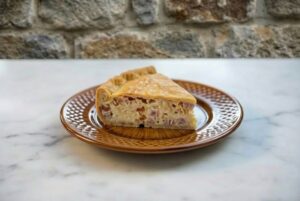
Italian Easter Pie isn’t light. It isn’t subtle. It isn’t meant to be. It’s rich, layered, and unapologetically full, just like the holiday it represents. When you slice into it and see the meats and cheeses packed tightly inside that golden crust, you’re not just cutting into a dish. You’re cutting into centuries of tradition, migration, faith, and family. And that’s what makes it unforgettable.
Typical Ingredients in Easter Meat Pie
While every family recipe is a little different, traditional Italian Easter Pie, also known as Pizza Rustica follows a rich, hearty formula rooted in celebration and abundance. Below are the ingredients most commonly found in versions from Italy and Italian American kitchens.
Crust
- All-purpose flour
- Eggs
- Butter or lard
- Salt
- Cold water or milk
(Some families use a slightly sweetened pastry dough, while others keep it completely savory.)
Cheese
- Ricotta (whole milk, well drained)
- Mozzarella (cubed or shredded)
- Provolone (sharp or mild)
- Pecorino Romano (grated)
- Parmesan (optional, for extra depth)
Ricotta gives the pie its creamy base, while aged cheeses add saltiness and structure.
Meats
- Italian salami
- Prosciutto
- Capicola (also called coppa)
- Soppressata
- Sweet or hot Italian sausage (sometimes pre-cooked and crumbled)
Traditionally, families used cured meats they had preserved through winter — making the pie a true celebration of plenty after Lent.
Eggs
- Whole eggs mixed into the filling
- Sometimes additional whole eggs baked directly into the pie (symbolizing rebirth and resurrection)
Seasonings
- Fresh parsley
- Black pepper
- Garlic (optional)
- Nutmeg (in some regional versions)
There isn’t just one authentic recipe. In regions like Naples and throughout Southern Italy, ingredients vary slightly by tradition and availability. Italian-American versions often became even more meat-heavy over time.
But the heart of the pie remains the same:
eggs, cheese, cured meats, and a sturdy crust, baked together into a rich, celebratory centerpiece.
Ingredients
Equipment
Instructions
- DoughIn a large bowl, mix flour and salt. Cut in butter until crumbly. Add eggs and mix. Slowly add cold water until dough forms. Divide into two portions (⅔ for bottom, ⅓ for top). Wrap and chill 30 minutes.
- FillingIn a large bowl, whisk ricotta and eggs until smooth. Fold in mozzarella, provolone, Pecorino Romano, meats, pepper, and parsley. Mix well.
- AssemblePreheat oven to 375°F.Roll out the larger dough portion and line the springform pan, pressing up the sides. Fill with the meat and cheese mixture.Roll out remaining dough and place over top. Seal edges and trim excess. Cut small slits in the top for steam.
- BakeBake 60–75 minutes, until golden brown and center is set.Cool at least 1 hour before slicing (best served room temperature).
Notes
Drain ricotta overnight in the refrigerator using cheesecloth or a fine mesh strainer for best texture. Cube – Don’t Shred the Meats: Small cubes of salami, capicola, and provolone give the pie its classic mosaic look when sliced. Shredded meats can make the filling dense and muddy. Use a Deep Pan: A 9-inch springform pan works best because the filling is substantial. A regular shallow pie dish may overflow. Chill the Dough: Cold dough equals flaky crust. If it becomes soft while working, refrigerate it again before baking. Bake Until Fully Set: The center should be firm and no longer jiggly. If browning too quickly, loosely tent with foil. Let It Rest: Allow at least 1 hour (preferably 2–3 hours) before slicing. The pie slices cleaner at room temperature and flavors deepen as it cools. Watch the Salt: Cured meats and Pecorino Romano are naturally salty. Taste your filling before adding extra salt. Nutrition Estimated Facts
Italian Easter Meat Pie (Pizza Rustica)
(Pizza Rustica) — per serving (1 slice, 1/8 of a 9-inch pie).
| Nutrient | Amount | % Daily Value* |
|---|---|---|
| Calories | 640 | — |
| Total Fat | 42g | 54% |
| Saturated Fat | 18g | 90% |
| Cholesterol | 165mg | 55% |
| Sodium | 1,280mg | 56% |
| Total Carbohydrate | 32g | 12% |
| Dietary Fiber | 1g | 4% |
| Total Sugars** | 2g | — |
| Added Sugars | 0g | 0% |
| Protein | 32g | 64% |
| Calcium | 350mg | 27% |
| Iron | 2.5mg | 14% |
| Potassium | 320mg | 7% |
*Percent Daily Values are based on a 2,000-calorie diet.
**Sugars are naturally occurring from dairy; no added sugars included.
The majority of calories and fat come from: Whole milk ricotta, Mozzarella and provolone cheeses, Cured meats (salami, capicola, prosciutto) and Butter in the crust These ingredients also account for the high saturated fat and sodium levels typical of traditional Easter Meat Pie. While rich and indulgent, it’s designed as a celebratory holiday dish rather than an everyday meal.
Tried this recipe?
Let us know how it was!Serving
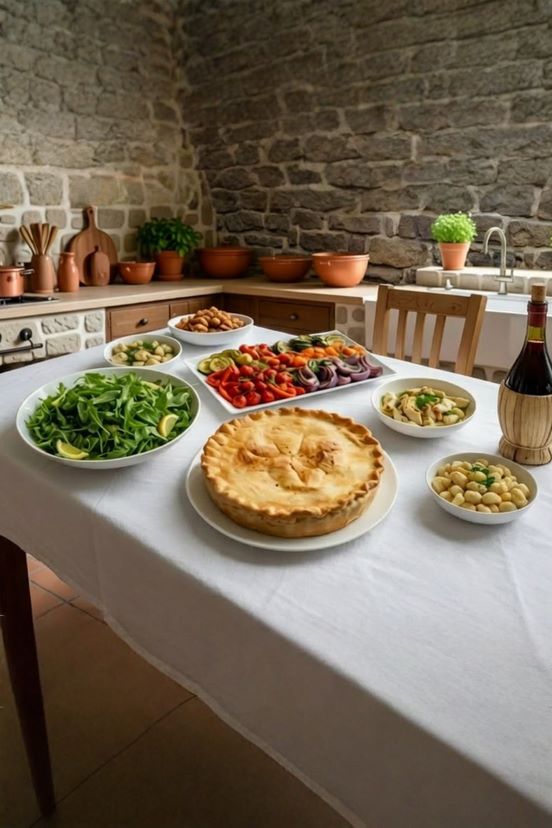
Italian Easter Meat Pie, or Pizza Rustica, is best served at room temperature so the flavors fully develop and the slices hold their shape. Traditionally made in Italy and especially popular in regions like Southern Italy, this rich and hearty pie shines as the centerpiece of an Easter table. After baking, let it rest for at least one to two hours before slicing to ensure clean cuts and the perfect texture. It pairs beautifully with light, fresh sides like an arugula salad with lemon dressing, roasted vegetables, or marinated artichokes dishes that balance the pie’s richness.
For drinks, crisp white wines such as Pinot Grigio, sparkling Prosecco, or medium-bodied reds like Chianti complement the salty cured meats and creamy cheeses. Whether served at brunch or dinner, keeping the accompaniments simple allows the savory depth of the pie to truly stand out while honoring its long-standing holiday tradition.
Storage
Traditional in Italy and widely prepared throughout Southern Italy, this rich and hearty pie stores surprisingly well making it perfect for holiday prep and leftovers.
Once the pie has fully cooled, wrap it tightly in plastic wrap or aluminum foil, or store slices in an airtight container to preserve freshness. It can be kept in the refrigerator for up to 4 days.
For longer storage, freeze individual slices wrapped securely to prevent freezer burn; they can last up to 2–3 months in the freezer.
When ready to eat, thaw frozen slices overnight in the refrigerator and reheat gently in the oven at a low temperature (around 325°F) to restore the crust’s texture without drying out the filling. Proper storage helps maintain its flavor, moisture, and structure so you can enjoy this Easter favorite beyond the holiday itself.