
Ingredients
Equipment
Instructions
- DoughIn a large bowl, mix flour and salt. Cut in butter until crumbly. Add eggs and mix. Slowly add cold water until dough forms. Divide into two portions (⅔ for bottom, ⅓ for top). Wrap and chill 30 minutes.
- FillingIn a large bowl, whisk ricotta and eggs until smooth. Fold in mozzarella, provolone, Pecorino Romano, meats, pepper, and parsley. Mix well.
- AssemblePreheat oven to 375°F.Roll out the larger dough portion and line the springform pan, pressing up the sides. Fill with the meat and cheese mixture.Roll out remaining dough and place over top. Seal edges and trim excess. Cut small slits in the top for steam.
- BakeBake 60–75 minutes, until golden brown and center is set.Cool at least 1 hour before slicing (best served room temperature).
Notes
Drain the Ricotta Well: Excess moisture is the #1 reason for a soggy pie.
Drain ricotta overnight in the refrigerator using cheesecloth or a fine mesh strainer for best texture. Cube - Don’t Shred the Meats: Small cubes of salami, capicola, and provolone give the pie its classic mosaic look when sliced. Shredded meats can make the filling dense and muddy. Use a Deep Pan: A 9-inch springform pan works best because the filling is substantial. A regular shallow pie dish may overflow. Chill the Dough: Cold dough equals flaky crust. If it becomes soft while working, refrigerate it again before baking. Bake Until Fully Set: The center should be firm and no longer jiggly. If browning too quickly, loosely tent with foil. Let It Rest: Allow at least 1 hour (preferably 2–3 hours) before slicing. The pie slices cleaner at room temperature and flavors deepen as it cools. Watch the Salt: Cured meats and Pecorino Romano are naturally salty. Taste your filling before adding extra salt. Nutrition Estimated Facts
The majority of calories and fat come from:
Whole milk ricotta, Mozzarella and provolone cheeses, Cured meats (salami, capicola, prosciutto) and Butter in the crust These ingredients also account for the high saturated fat and sodium levels typical of traditional Easter Meat Pie. While rich and indulgent, it’s designed as a celebratory holiday dish rather than an everyday meal.
Drain ricotta overnight in the refrigerator using cheesecloth or a fine mesh strainer for best texture. Cube - Don’t Shred the Meats: Small cubes of salami, capicola, and provolone give the pie its classic mosaic look when sliced. Shredded meats can make the filling dense and muddy. Use a Deep Pan: A 9-inch springform pan works best because the filling is substantial. A regular shallow pie dish may overflow. Chill the Dough: Cold dough equals flaky crust. If it becomes soft while working, refrigerate it again before baking. Bake Until Fully Set: The center should be firm and no longer jiggly. If browning too quickly, loosely tent with foil. Let It Rest: Allow at least 1 hour (preferably 2–3 hours) before slicing. The pie slices cleaner at room temperature and flavors deepen as it cools. Watch the Salt: Cured meats and Pecorino Romano are naturally salty. Taste your filling before adding extra salt. Nutrition Estimated Facts
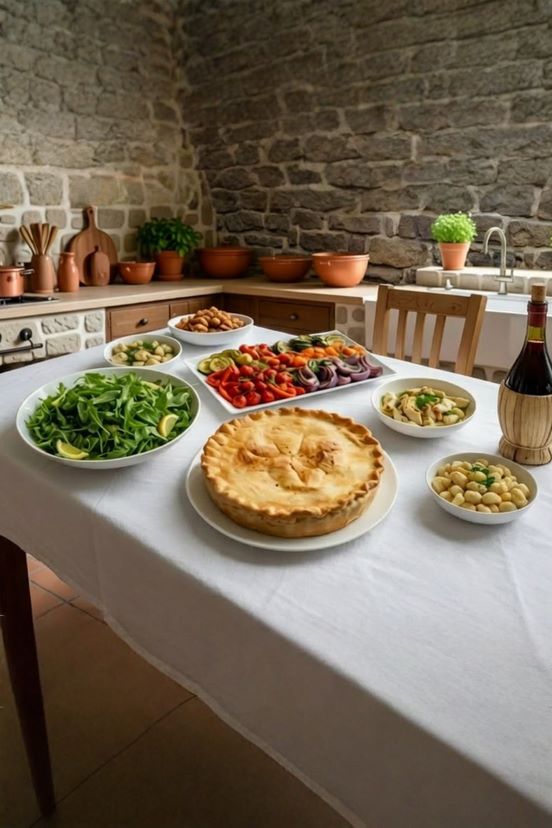
Italian Easter Meat Pie (Pizza Rustica)
(Pizza Rustica) — per serving (1 slice, 1/8 of a 9-inch pie).
| Nutrient | Amount | % Daily Value* |
|---|---|---|
| Calories | 640 | — |
| Total Fat | 42g | 54% |
| Saturated Fat | 18g | 90% |
| Cholesterol | 165mg | 55% |
| Sodium | 1,280mg | 56% |
| Total Carbohydrate | 32g | 12% |
| Dietary Fiber | 1g | 4% |
| Total Sugars** | 2g | — |
| Added Sugars | 0g | 0% |
| Protein | 32g | 64% |
| Calcium | 350mg | 27% |
| Iron | 2.5mg | 14% |
| Potassium | 320mg | 7% |
*Percent Daily Values are based on a 2,000-calorie diet.
**Sugars are naturally occurring from dairy; no added sugars included.
The majority of calories and fat come from: Whole milk ricotta, Mozzarella and provolone cheeses, Cured meats (salami, capicola, prosciutto) and Butter in the crust These ingredients also account for the high saturated fat and sodium levels typical of traditional Easter Meat Pie. While rich and indulgent, it’s designed as a celebratory holiday dish rather than an everyday meal.