Croccante: Italian hard brittle candy
Croccante feels timeless. From the start, it stays simple, rustic, and irresistibly crunchy. Cooks prepare this classic Italian sweet by caramelizing sugar and folding in toasted nuts. As the mixture cools, it slowly sets into glossy amber slabs. With each bite, the brittle cracks and snaps.

At the heart of croccante lies contrast. Bitter caramel balances sweet sugar. Meanwhile, deep nutty flavors cut through a brittle, glass-like crunch. Traditionally, almonds and hazelnuts anchor the recipe. In other regions, pistachios, peanuts, and mixed nuts reflect local tastes and special occasions. The story began long before candy thermometers and nonstick pans. Across the Mediterranean, early cooks preserved nuts with honey or sugar.
As sugar spread through Italy during the Middle Ages, these simple sweets evolved. At the same time, trade with the Arab world helped shape croccante into its modern form.
By the Renaissance, croccante had moved into convent kitchens and noble homes. There, cooks transformed humble ingredients into refined treats for feasts and celebrations. Soon after, street vendors brought croccante to the public. They poured hot caramel and nuts onto marble slabs. Then they spread it thin and snapped it into shards for fairs and markets.
A Sweet with Many Names
In Italian, “croccante” simply means “crunchy.” However, across the country, the sweet carries different names. In Sicily, people call it cubbaita or giuggiulena. In some versions, sesame seeds replace nuts entirely. Meanwhile, in Tuscany and central Italy, almond croccante appears during holidays. Farther north in Piedmont, hazelnuts take center stage, prized for their rich flavor.
Despite these regional differences, the spirit of croccante remains unchanged. It relies on few ingredients. As a result, it delivers bold flavor. Above all, it always ends with a clean, satisfying snap.

Today, you find hard brittle candy at Christmas markets, religious festivals, weddings, and village fairs. Most often, people eat it on its own, broken into rustic pieces. At the same time, cooks use it to garnish gelato, semifreddo, and cakes, or crush it into creams and fillings.
For many Italians, croccante means nostalgia. It echoes with sugar cracking between your teeth.
It carries the scent of warm caramel in the air. Inevitably, it leaves sticky fingers at a festa. In this way, it proves that the best sweets often come from simple ideas.
In a world of elaborate desserts, croccante stays proudly uncomplicated. It skips decoration and layers. Instead, it demands technique and timing. Cook the caramel carefully. Toast the nuts deeply. Finally, let the ingredients speak.
That simplicity explains its longevity. Ultimately, croccante stands as more than candy. It reminds us that Italian sweets do not need complexity to linger in memory. Sometimes, sugar, nuts, and patience are enough.
Typical Ingredients for Croccante
Granulated sugar
Whole almonds
Hazelnuts, pistachios, or mixed nuts – regional variations
Lemon juice (optional)
Neutral oil – for greasing surfaces and utensils
Sesame seeds – optional
Variations
Croccante is versatile, and you can adapt it to suit different tastes and regions:
Nut variations: Swap almonds for hazelnuts, pistachios, peanuts, or a mix of your favorite nuts.
Sesame croccante: Use sesame seeds instead of nuts, inspired by the Sicilian cubbaita.
Sweet and salty: Add a pinch of sea salt to the caramel for a balanced flavor.
Spiced croccante: Sprinkle in a pinch of cinnamon, nutmeg, or chili for a unique twist.
Chocolate-coated: Once cooled, dip pieces in melted dark chocolate for a decadent finish.
Mini bites: Pour caramel and nuts into small molds for individual servings or gift boxes.
Ingredients
Equipment
Instructions
- Prepare workspace. Line a baking sheet with parchment paper or a silicone mat. Lightly oil the surface and your spatula. Set everything within reach. Croccante moves fast once the caramel is ready.
- Toast the almonds. Heat them in a dry skillet over medium heat for 3–5 minutes, stirring often. Remove them once fragrant and lightly golden. Set aside.
- Make the caramel. Add the sugar to a heavy-bottomed saucepan and place it over medium heat. Let the sugar melt slowly without stirring. As it melts, swirl the pan gently to encourage even caramelization. When the sugar turns a deep amber color, add the lemon juice if using.
- Immediately add the toasted almonds. Stir quickly to coat them completely in caramel. Work fast, as the mixture will begin to thicken almost immediately.
- Pour the hot croccante onto the prepared surface. Spread it thin with an oiled spatula or press it gently with heat-resistant gloves. Aim for an even layer without overworking it.
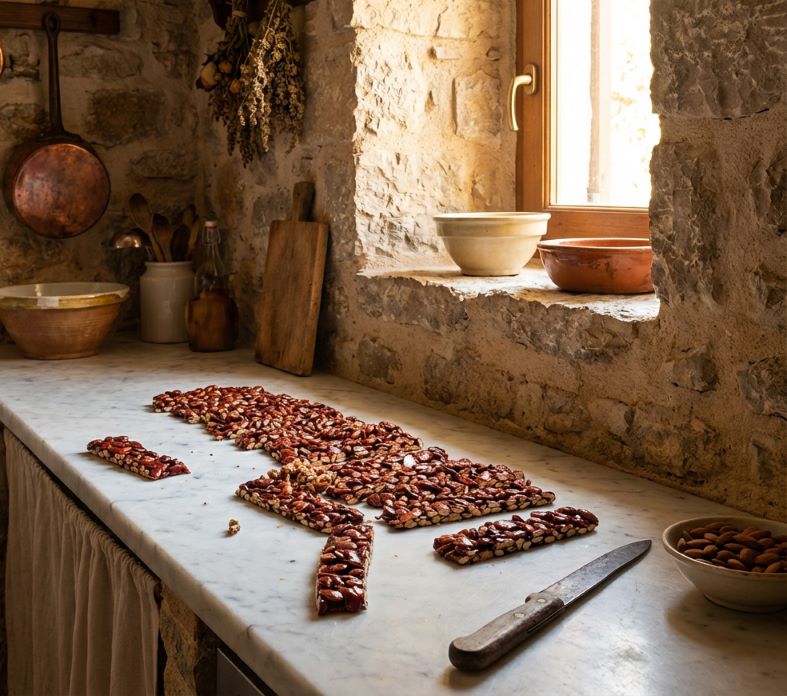
- Let the Croccante cool completely at room temperature. This takes about 15 minutes. Once hardened, break it into rustic shards by hand or with the back of a knife.
Notes
Nutrition Estimated Facts – Croccante
Italian hard brittle candy Serving Size: 1 oz (28g)
| Nutrient | Amount | %DV |
|---|---|---|
| Calories | 145 | |
| Total Fat | 7g | 9% |
| Saturated Fat | 0.5g | 3% |
| Cholesterol | 0mg | 0% |
| Sodium | 15mg | 1% |
| Total Carbohydrate | 19g | 7% |
| Dietary Fiber | 1g | 4% |
| Total Sugars | 17g | |
| Added Sugars | 15g | 30% |
| Protein | 3g | |
| Vitamin D | 0mcg | 0% |
| Calcium | 45mg | 4% |
| Iron | 0.7mg | 4% |
| Potassium | 130mg | 2% |
Percent Daily Values (DV) are based on a 2,000-calorie diet.
Most calories come from caramelized sugar (added sugars), which accounts for the majority of carbohydrates. Nuts (commonly almonds or hazelnuts) contribute the fat content—primarily heart-healthy unsaturated fats—along with small amounts of protein and fiber.Tried this recipe?
Let us know how it was!
Serving
Serve Croccante on its own as a sweet snack, best enjoyed broken into rustic shards and served at room temperature. Break it into smaller pieces for dessert platters. Use it as a garnish for gelato, semifreddo, panna cotta, or cakes. Crush it and fold it into whipped cream or pastry fillings for added crunch.
Garnish gelato, semifreddo, panna cotta, or cakes for extra crunch.
Crush it and fold into whipped cream or pastry fillings.
Serve at festivals, holiday gatherings, or as a party treat—one batch easily serves 15–20 people.
For the full experience, pair Croccante with a cup of espresso or sweet dessert wine to balance the caramel’s
Storage
Store croccante in an airtight container at room temperature. Keep it away from heat and humidity to preserve its crisp texture. Properly stored, croccante stays crispy for up to 2 weeks.
For longer storage, you can freeze croccante. Wrap individual pieces tightly in parchment paper or plastic wrap, then place them in a freezer-safe container or bag. Croccante can be frozen for up to 3 months. To enjoy, simply thaw at room temperature—do not microwave, as this can make the caramel sticky.