Italian Easter Bread: Pane di Pasqua Recipe
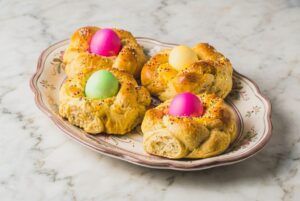
There’s something magical about the scent of freshly baked Pane di Pasqua drifting through the kitchen in the days leading up to Easter. In homes across Italy, this soft, slightly sweet, braided bread has long been more than just a holiday treat. It’s a symbol of rebirth, family, and celebration.
Pane di Pasqua, which simply means “Easter Bread,” traces its origins to deeply rooted Christian traditions.
Easter marks the end of Lent, a 40-day period of fasting and reflection. Historically, rich ingredients like eggs, butter, and sugar were restricted during Lent. When Easter Sunday finally arrived, families celebrated by baking breads enriched with these once-forbidden ingredients a joyful and delicious expression of abundance.
Eggs, in particular, carry powerful symbolism. Representing new life and resurrection, they often appear nestled directly into the braided dough, sometimes dyed in bright pastel colors. In many regions, the bread is shaped into wreaths or braids, circular forms that symbolize eternity and the crown of thorns.
Regional Variations Across Italy
Like many Italian recipes, Pane di Pasqua changes from region to region. In parts of southern Italy, especially in Sicily, you’ll find decorative versions called cuddura cu l’ova, often shaped into doves, baskets, or hearts. In Naples, Easter baking traditions also include savory pies like Casatiello, showing how diverse and rich the holiday table can be.
Though recipes vary, most versions of Pane di Pasqua share a soft, brioche-like texture, lightly scented with citrus zest or anise. Some families add a simple sugar glaze and colorful sprinkles on top, a touch that feels especially nostalgic and festive.
More Than Just Bread
Beyond its religious symbolism, Pane di Pasqua holds emotional meaning. Traditionally, families gather on Holy Saturday to bake together, passing down recipes scribbled on worn index cards or remembered by heart. Children often help dye eggs or twist the dough into braids, turning the process into a cherished ritual.
In Italian-American communities, this bread became a way for immigrants to hold onto their heritage. Even far from home whether in the United States or near the historic heart of Catholicism in Vatican City, the tradition carried forward, keeping cultural roots alive through flour, yeast, and memory.
Today, Pane di Pasqua continues to grace Easter tables around the world. While modern kitchens may use stand mixers instead of wooden boards, the meaning remains the same. It’s a celebration of renewal after hardship, sweetness after sacrifice, and the joy of gathering around the table.
Baking Pane di Pasqua isn’t just about following a recipe, it’s about participating in a story centuries old. With every braid and every brightly colored egg pressed gently into the dough, you’re carrying on a tradition that has warmed homes and hearts for generations.
And truly, is there a better way to celebrate Easter than with bread made by hand and shared with love?
Typical Ingredients in Pane di Pasqua
Dough
- All-purpose flour
- Active dry yeast or instant yeast
- Warm milk
- Granulated sugar
- Unsalted butter (softened or melted)
- Eggs (mixed into the dough)
Flavorings
- Fresh orange zest or lemon zest
- Anise seeds or a splash of anise extract (optional but traditional in many southern Italian recipes)
- Vanilla extract (in some modern versions)
- A pinch of salt
Decoration
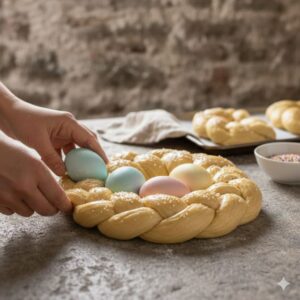
Whole raw eggs (often dyed pastel colors) gently pressed into the braided dough before baking
Egg wash (beaten egg brushed on top for shine)
Powdered sugar (optional)
Colored sprinkles (Italian-American versions optional)
While recipes vary slightly by region and family tradition, most versions of Pane di Pasqua share a rich, sweet yeast dough made with simple pantry staples.
The combination creates a soft, slightly sweet bread with a tender crumb somewhere between brioche and challah in texture. The citrus zest gives it a bright spring flavor, while the anise (if used) adds a subtle, nostalgic aroma that many associate with traditional Easter baking in Italy.
Ingredients
Equipment
Instructions
- Activate the YeastIn a small bowl, combine warm milk and yeast. Let sit 5–10 minutes until foamy.
- Make DoughIn a large bowl or stand mixer, combine flour, sugar, and salt. Add eggs, butter, orange zest, anise seeds, vanilla, and the yeast mixture.Mix until a soft dough forms. Knead 8–10 minutes (5–7 minutes in mixer) until smooth and elastic.
- First RisePlace dough in a lightly greased bowl. Cover and let rise in a warm spot until doubled in size, about 1½–2 hours.
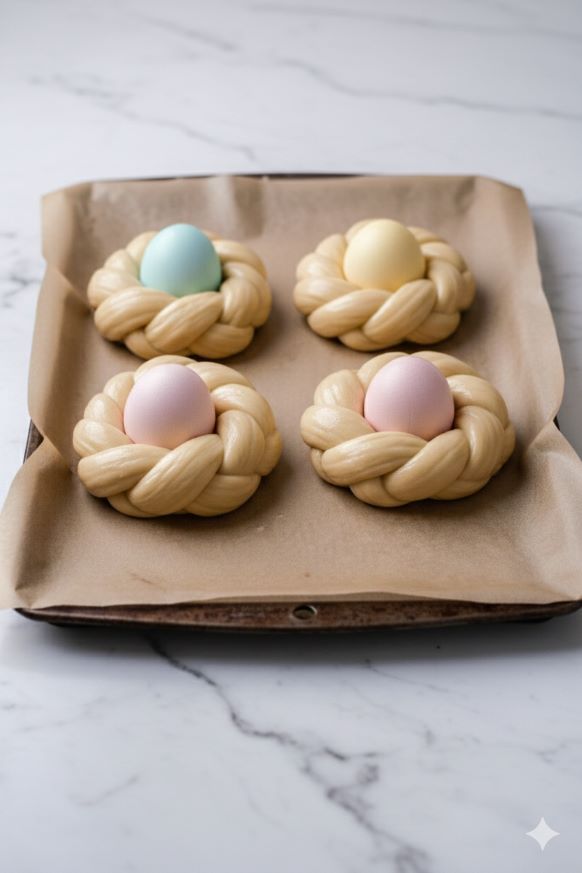
- Shape the BreadsPunch down dough and divide into 12 equal pieces. Roll each piece into a 12-inch rope.Twist two ropes together and form into a circle, pinching ends to seal. Place on parchment-lined baking sheet. Repeat for all 6 breads.If using dyed eggs, gently nestle one raw egg into the center of each braid.
- Second RiseCover loosely and let rise 45–60 minutes until puffy.
- BakePreheat oven to 350°F. Brush with egg wash.Bake 20–25 minutes until golden brown. Internal temperature should reach about 190°F.Cool completely on a rack.
- Optional GlazeWhisk powdered sugar and milk until smooth. Drizzle over cooled breads and top with sprinkles.
Notes
Nutrition Estimated Facts
Italian Easter Bread-Pane di Pasqua
(Per 1 Small Bread – Estimated, Without Glaze)
| Nutrient | Amount | %DV |
|---|---|---|
| Calories | 410 | — |
| Total Fat | 12g | 15% |
| Saturated Fat | 7g | 35% |
| Cholesterol | 95mg | 32% |
| Sodium | 210mg | 9% |
| Total Carbohydrates | 63g | 23% |
| Dietary Fiber | 2g | 7% |
| Total Sugars | 14g | — |
| Added Sugars | 12g | 24% |
| Protein | 11g | 22% |
Tried this recipe?
Let us know how it was!Serving
Serve slightly warm or at room temperature. Pane di Pasqua pairs beautifully with espresso, cappuccino, or fresh berries at Easter brunch. It also makes a lovely edible gift wrapped in parchment and tied with ribbon.
Storage
Store at room temperature in an airtight container for up to 3 days.
Refrigerate up to 5 days (bring to room temp before serving).
Freeze (without glaze) up to 2 months. Thaw overnight and warm gently before serving.