
Ingredients
Equipment
Instructions
- Activate the YeastIn a small bowl, combine warm milk and yeast. Let sit 5–10 minutes until foamy.
- Make DoughIn a large bowl or stand mixer, combine flour, sugar, and salt. Add eggs, butter, orange zest, anise seeds, vanilla, and the yeast mixture.Mix until a soft dough forms. Knead 8–10 minutes (5–7 minutes in mixer) until smooth and elastic.
- First RisePlace dough in a lightly greased bowl. Cover and let rise in a warm spot until doubled in size, about 1½–2 hours.
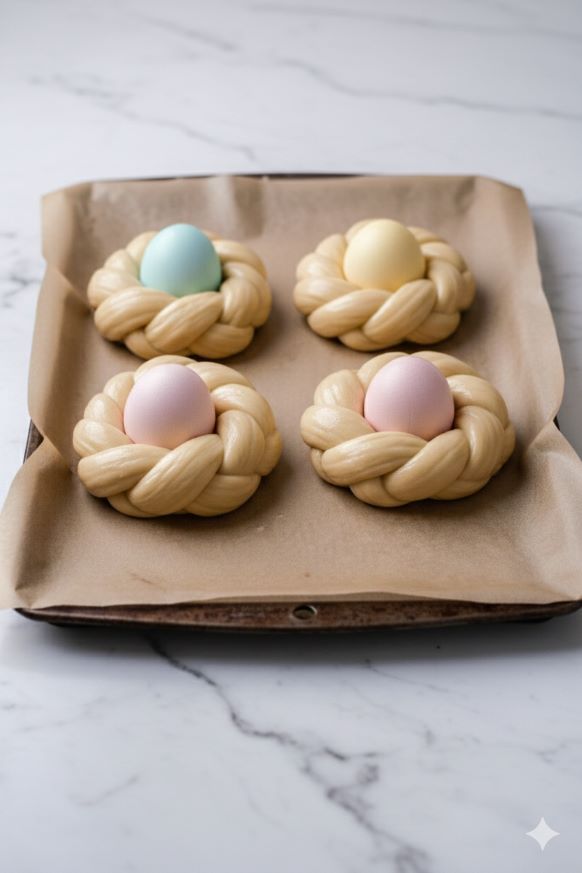
- Shape the BreadsPunch down dough and divide into 12 equal pieces. Roll each piece into a 12-inch rope.Twist two ropes together and form into a circle, pinching ends to seal. Place on parchment-lined baking sheet. Repeat for all 6 breads.If using dyed eggs, gently nestle one raw egg into the center of each braid.
- Second RiseCover loosely and let rise 45–60 minutes until puffy.
- BakePreheat oven to 350°F. Brush with egg wash.Bake 20–25 minutes until golden brown. Internal temperature should reach about 190°F.Cool completely on a rack.
- Optional GlazeWhisk powdered sugar and milk until smooth. Drizzle over cooled breads and top with sprinkles.
Notes
Use Room Temperature Ingredients: Eggs, butter, and milk blend more smoothly into the dough when they’re not cold. This helps create a softer, more even texture.
Don’t Rush the Rise: If your kitchen is cool, the dough may need a little extra time. A properly risen dough should feel puffy and nearly doubled in size — this is key to getting that light, tender crumb.
Check Your Milk Temperature: Warm, not hot! Around 105–110°F is ideal. Milk that’s too hot can kill the yeast and prevent the dough from rising.
Knead Until Smooth and Elastic: The dough should be soft and slightly tacky but not sticky. If it tears easily, keep kneading — you’re building the gluten that gives the bread structure.
Dyed Eggs Are Traditional: Place raw dyed eggs directly into the dough before baking — they’ll cook in the oven along with the bread. For food safety, avoid using eggs that have been left out too long after dyeing.
Shape Evenly for Uniform Baking: Try to divide the dough evenly so all six breads bake at the same rate. A kitchen scale helps if you want precision.
Golden Brown: If unsure, check the internal temperature — about 190°F means it’s fully baked. The bottoms should sound slightly hollow when tapped.
Customize the Flavor: Prefer a stronger citrus flavor? Add extra zest. Love anise? Increase slightly — but gently, as it can overpower quickly.
Glaze After Cooling: If adding icing, wait until the breads are completely cool so it doesn’t melt off.
Flour provides most carbohydrates and calories; butter and eggs contribute fat; sugar increases overall carbohydrate and calorie content.
Nutrition Estimated Facts
Italian Easter Bread-Pane di Pasqua
(Per 1 Small Bread – Estimated, Without Glaze)
| Nutrient | Amount | %DV |
|---|---|---|
| Calories | 410 | — |
| Total Fat | 12g | 15% |
| Saturated Fat | 7g | 35% |
| Cholesterol | 95mg | 32% |
| Sodium | 210mg | 9% |
| Total Carbohydrates | 63g | 23% |
| Dietary Fiber | 2g | 7% |
| Total Sugars | 14g | — |
| Added Sugars | 12g | 24% |
| Protein | 11g | 22% |