
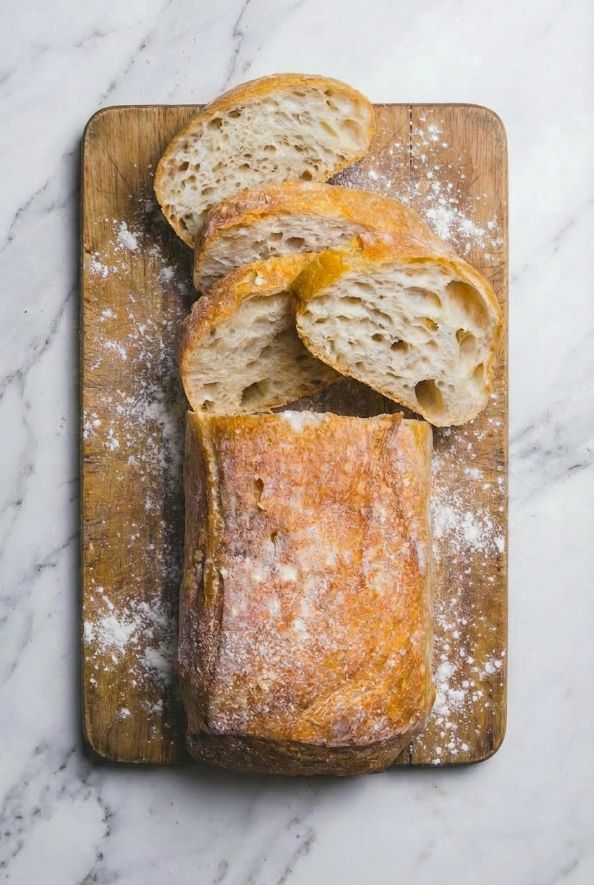
Ingredients
Equipment
Instructions
Biga
- Make the Biga (Day Before)Mix flour, water, and yeast until just combined (rough and sticky).Cover loosely and let rest at room temperature 12–16 hours.The biga should be bubbly, domed, and smell mildly sweet.
Dough
- Mix the DoughTear the biga into chunks and place in a bowl.Add flour, water, yeast, and olive oil.Mix until a very wet, sticky dough forms.Add salt and mix 3–5 minutes more (or knead gently by hand).Ciabatta dough is loose—don’t add extra flour.
- Bulk Fermentation (1½–2 hours)Cover and let rise until doubled.Every 30 minutes, perform stretch-and-folds (3–4 total):Pull one side up, fold over, rotate bowl, repeat.This builds structure without kneading.
- Shape the LoavesGenerously flour your work surface.Gently turn out dough—do not degas.Divide into 2 rectangles using a bench scraper.Transfer to parchment paper.Cover and rest 30–45 minutes.
- BakePreheat oven to 475°F (245°C) with stone or sheet inside.Place a small pan on oven floor for steam.Slide loaves (on parchment) onto hot surface.Add 1 cup hot water to steam pan.Bake 25–30 minutes, until deeply golden.Internal temp: ~205–210°F (96–99°C)
- CoolCool at least 45 minutes before slicing (important for crumb).
Nutrition
Notes
Bread Flour Works Best: opt for bread flour instead of all-purpose flour. Its higher protein content helps develop the gluten needed for ciabatta’s chewy structure.
Time to Rise: Long fermentation is key. Let the dough rise slowly to build flavor and allow those beautiful air pockets to form. Some bakers even prefer an overnight cold rise in the fridge.
Use Stretch and Fold Method: Traditional kneading isn’t necessary. Instead, use the “stretch and fold” technique during the first rise to strengthen the dough without overworking it.
Handle Gently: After the final proof, be careful not to deflate the dough. Gently shape it on a floured surface and avoid pressing out the air bubbles.
Bake on a Hot Surface: For the crispiest crust, bake your ciabatta on a preheated baking stone or steel. Adding steam to the oven (by placing a pan of hot water inside) can help enhance the crust even more.
Let It Cool Completely: As tempting as it is to slice in right away, let the bread cool fully. This helps the crumb set and keeps the texture light and airy.
Most of the calories in ciabatta bread come from refined wheat flour (carbohydrates), which provides energy and structure.
The small amount of fat comes primarily from olive oil, contributing flavor and a slightly tender crumb rather than richness.
Ciabatta Bread - Nutrition Facts (Estimated Per Serving size: 1 slice -75g)
| Nutrient | Amount | %DV |
|---|---|---|
| Calories: ~170 | ||
| Total Fat | 2.5 g | 3% |
| Saturated Fat | 0.4 g | 2% |
| Cholesterol | 0 mg | 0% |
| Sodium | 310 mg | 13% |
| Total Carbohydrate | 32 g | 12% |
| Dietary Fiber | 1.2 g | 4% |
| Total Sugars | 0.5 g | — |
| Includes Added Sugars | 0 g | 0% |
| Protein | 6 g | — |
| Vitamin D | 0 mcg | 0% |
| Calcium | 20 mg | 2% |
| Iron | 1.8 mg | 10% |
| Potassium | 70 mg | 2% |
The small amount of fat comes primarily from olive oil, contributing flavor and a slightly tender crumb rather than richness.