Italian Almond Crescent Cookies: Soft, Buttery, Almond-Rich Holiday Classics
Italian Almond Crescent Cookies often called Mezzelune alle Mandorle bring instant comfort. One look at their snowy powdered-sugar coating, and your kitchen already feels cozier. They’re buttery, tender, and melt the moment they hit your tongue. Italians have served these crescents at holiday tables for generations. The ingredients are simple, but the flavor carries that unmistakable Old-World charm.
Almonds have always held a special place in Italian baking. Sicily, especially, has grown almond trees for over a thousand years. Arab influence shaped the island’s orchards, and the tradition only grew stronger over time. As almonds worked their way into amaretti, marzipan, and countless sweets, these crescent cookies naturally followed. They became a family staple across southern and central Italy.

Authentic Italian Almond Crescent Cookies for the Holidays
Many say the crescent shape came from winter celebration pastries. Rolling and shaping each cookie by hand turned into a family ritual. Nonna made big batches for Christmas, weddings, or Sunday visits, and everyone helped. Each region added its own touch. Some used fine, blanched almonds for a silky crumb. Others kept the grind coarse for a rustic bite.
Today, Italian Almond Crescent Cookies remain beloved not just for their taste but for the memories they spark. They remind us of family gatherings, slow afternoons, and kitchens filled with warm, sweet aromas. Enjoy them with espresso, add them to holiday cookie trays, or eat one straight from the oven. They’re simple, elegant, and nearly impossible to stop at just one.
A Timeless Christmas Treat
You know how some holiday traditions just stick with you? For me, Italian Almond Crescent Cookies are one of those delightful bits of joy. Seriously, they’re soft, buttery goodness, shaped like tiny crescents that honestly feel like they were crafted just for you. And that sprinkle of powdered sugar on top? It’s like a gentle dusting of snow on a crisp winter morning makes every bite feel a bit like magic.
Typical Ingredients
Almond flour or finely ground almonds – the heart of the cookie and its rich, nutty flavor
All-purpose flour – gives structure and keeps the cookies tender
Unsalted butter – creates that soft, melt-in-your-mouth texture
Powdered sugar – used in the dough and for coating the warm cookies
Granulated sugar – adds sweetness and helps with browning
Egg yolk – binds the dough and adds richness
Vanilla extract – brings warmth and depth
Almond extract – boosts the aroma and classic almond taste
Salt – just a pinch to balance the sweetness
Optional but common variations:
Lemon zest for brightness
Orange zest for a citrus twist
Coarse almonds for a rustic texture
Dark chocolate for dipping once the cookies cool
Mezzelune alle Mandorle (Italian Almond Crescents)
Mezzelune alle Mandorle, or “almond half-moons,” are one of those Italian treats that feel instantly familiareven if you’re tasting them for the first time. They’re cozy, delicate, and shaped with a gentle curve that makes them look as if they were crafted with love. Across Italy, this name refers to an entire family of almond-filled or almond-flavored sweets, each with its own history, charm, and personality.
The crescent shape has existed for centuries and is often associated with winter celebrations and holiday baking. Moreover, every regionand honestly, every nonna has her own version. Some cookies are crisp and buttery, while others are soft and chewy, and some even hide a sweet filling inside, adding an extra layer of surprise.
For example, one popular version is the Vanillekipferl, a delicate, buttery crescent dusted with vanilla sugar. These dreamy little cookies crumble at the slightest touch and melt on your tongue. Although they originally came from Austria, Italians embraced them long ago, particularly during Christmas. Today, you’ll find them everywhere—from northern bakeries to festive holiday trays.
Meanwhile, travel south to Sicily, and you’ll encounter Paste di Mandorla, a softer, chewier cousin. They’re made with almond flour, sugar, egg whites, and bright citrus zest. Often, bakers top them with a whole almond or a colorful candied cherry. After just one bite, it’s easy to understand why Sicily is celebrated for its almond sweets.
Additionally, other regions take a more rustic approach, shaping pastry dough into half-moons and filling them with fig jam, chopped almonds, or citrus marmalade. These little hand pies are often fried or baked, depending on the old family recipe, yet they always carry that unmistakable homemade charm.

Ingredients
Instructions
- Preheat oven: Preheat the oven to 350°F (175°C). Line baking sheets with parchment paper or silicone mats.
- Make the dough: In a large bowl, cream together softened butter and granulated sugar until light and fluffy. Add egg yolk, vanilla extract, and almond extract, and mix until combined.
- Add dry ingredients: Gently fold in almond flour, all-purpose flour, and a pinch of salt until a smooth dough forms. Be careful not to overmix.
- Chill the dough: Wrap the dough in plastic wrap and refrigerate for at least 1 hour. This makes it easier to shape the cookies.
- Shape the crescents: Take small pieces of dough (about 1 tablespoon each) and roll them into small logs. Curve each log into a crescent shape and place on the prepared baking sheets about 1 inch apart.
- Bake: Bake for 12–15 minutes, until the edges are lightly golden. Keep a close eye on them—they can brown quickly.
- Dust with powdered sugar: While still slightly warm, transfer cookies to a cooling rack. Use a fine mesh sieve to dust them generously with powdered sugar.
- Cool and serve: Let cookies cool completely before storing. They pair beautifully with coffee, tea, or a glass of dessert wine.
Notes
Nutrition Estimated Facts
Italian Almond Crescent Cookies
Italian Almond Crescent Cookies per 1 cookie serving
| Nutrient | Amount (per 1 cookie) | % Daily Value (DV) |
|---|---|---|
| Calories | ~133 kcal | 7% |
| Total Fat | ~6 g | 8% |
| Saturated Fat | ~1 g | 5% |
| Cholesterol | ~16 mg | 5% |
| Sodium | ~46 mg | 2% |
| Total Carbohydrate | ~19 g | 7% |
| Dietary Fiber | ~1 g | 4% |
| Total Sugars | ~9 g | — |
| Added Sugars | ~8–9 g | 16–18% |
| Protein | ~2 g | 4% |
Tried this recipe?
Let us know how it was!Serving
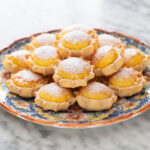
Arrange the cookies on an attractive plate and sprinkle extra powdered sugar on top for a simple but elegant presentation.
With coffee or tea: These cookies are perfect alongside a warm espresso, cappuccino, or a fragrant cup of tea. The nutty, buttery flavor pairs beautifully with hot drinks.

As a dessert platter treat: Include them on a holiday cookie tray or dessert board. Their delicate crescent shape and snowy powdered sugar make them look as festive as they taste.
With dessert wine: For a more elegant twist, serve them with a glass of Vin Santo or another sweet Italian wine, the almond flavor complements the wine beautifully.
Storage
Room temperature: Store your cookies in an airtight container at room temperature for up to 1 week. Make sure they are completely cooled before storing to keep them crisp on the outside and tender inside.
Freezing: These cookies freeze beautifully for up to 3 months. Arrange them in a single layer on a baking sheet and freeze until firm. Then transfer to an airtight container or freezer bag, separating layers with parchment paper to prevent sticking.
Serving after freezing: When ready to enjoy, let the cookies thaw at room temperature for about 30 minutes. For the freshest look, lightly dust with powdered sugar just before serving. Freezing in portions makes it easy to enjoy a few cookies at a time without thawing the entire batch.