Authentic Old School Biscotti
Old-school biscotti, also known as cantucci or biscotti di Prato, trace their roots back to medieval Prato, a historic city in Tuscany. Bakers in that era crafted these twice-baked cookies using just a few humble ingredients: flour, sugar, eggs, and almonds. With no added fat, the result was a dry, crunchy cookie designed for long shelf life—ideal for dipping into Vin Santo, Tuscany’s sweet dessert wine.
People traditionally baked biscotti in large batches for holidays and special gatherings, offering them as a symbol of hospitality and celebration. Over the centuries, different regions added their own twists, but classic cantucci have remained a beloved icon of Italy’s rustic baking traditions, valued for their simplicity, durability, and unforgettable crunch.
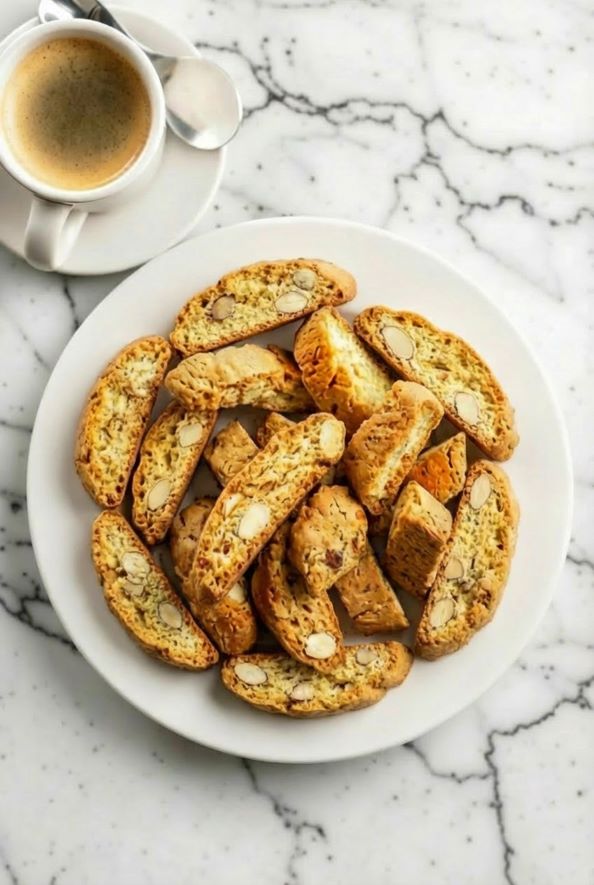
Cantucci deliver a golden, crisp bite with rich toasted almond flavor. Unlike modern, softer cookies, they skip the butter and oil completely. The dough brings together flour, sugar, whole almonds, and eggs—sometimes lifted with a touch of citrus zest. After the first bake, bakers slice the warm logs and return them to the oven, creating that signature twice-baked texture that stands up beautifully to a dunk in Vin Santo or a bold espresso.
Typical Ingredients
All-purpose flour
Granulated sugar
Whole eggs
Butter
Whole almonds, unblanched (with skins on)
Baking powder (modern addition; older versions relied only on eggs)
Salt
Milk
Anise extract
Vanilla (optional, often used outside Italy)
Orange zest (optional, traditional and authentic)
Dip—don’t bite right away. In Tuscany, cantucci aren’t meant to be crunched dry. Locals soften them in a glass of Vin Santo, the region’s sweet dessert wine. No wine on hand? A hot espresso or cappuccino works just as well. It’s less about chewing, more about savoring.
Ingredients
Instructions
- In a large bowl, beat the butter and 1 cup of sugar together until light and fluffy, which typically takes around 5 to 7 minutes. Add the eggs, one at a time, beating well after each addition. Mix in the extract. In a separate bowl, combine the dry ingredients, then gradually add them to the creamed mixture, mixing well. Stir in the almonds.
- Prepare a baking sheet by lining it with foil and greasing the foil. Divide the dough in half and shape each portion into a 12×3-inch rectangle directly on the foil. Brush the rectangles with milk and sprinkle the remaining sugar on top.
- Bake at 375°F until the rectangles turn golden brown and become firm to the touch, usually around 15 to 20 minutes. Using the foil, transfer the rectangles onto a wire rack and let them cool for 15 minutes. Reduce the oven heat to 300°F.
- Transfer the cooled rectangles to a cutting board and slice them diagonally into 1/2-inch slices using a serrated knife. Place the slices cut-side down on ungreased baking sheets.
- Bake for 10 minutes, then turn the slices over and bake for an additional 10 minutes or until they become firm. Remove the biscotti from the baking sheets and let them cool on wire racks. Store them in an airtight container.
Notes
Tried this recipe?
Let us know how it was!Variations
Chocolate Cantucci – Add cocoa powder to the dough or fold in dark chocolate chunks after the first bake.
Hazelnut or Pistachio Cantucci – Replace almonds partially or fully with toasted hazelnuts or pistachios.
Citrus Cantucci – Use lemon zest, mandarin zest, or a mix of citrus instead of orange.
Fig and Nut Cantucci – Incorporate chopped dried figs along with almonds for a Tuscan countryside variation.
Vin Santo Cantucci – Add a small splash of Vin Santo to the dough to enhance aroma and tradition.
Spiced Cantucci – Include cinnamon, clove, or nutmeg for a warmer, holiday-style biscotti.
Whole Wheat Cantucci – Replace part of the all-purpose flour with whole wheat flour for a rustic texture.
Gluten-Free Cantucci – Use a gluten-free flour blend designed for baking, keeping the almond-forward character intact.
Store Cantucci (Biscotti di Prato)
Cantucci are built to last that’s part of their old-world charm. Thanks to their dry, twice-baked texture, they keep beautifully for weeks if stored right.
Cool completely first: Before storing, let the biscotti cool fully. Any warmth will create steam and soften the crunch.
Airtight is key: Transfer your cantucci to an airtight container (a glass jar or tin works perfectly). This keeps out moisture and preserves that satisfying crispness.
Room temperature storage: Store them in a cool, dry spot—no fridge needed. Properly stored, they’ll stay fresh for up to 3–4 weeks.
Freeze for longer storage: Want to keep a batch on hand? Freeze them in a sealed container or freezer bag. Just let them come to room temp before serving—or reheat briefly in the oven to bring back the crunch.
Cantucci age well and travel even better, no wonder they’ve been a staple of Tuscan kitchens for centuries.