How to Make Casatiello
Casatiello is one of the most beloved savory breads of southern Italy. It comes from Naples and remains a symbol of Easter cooking in the region. The bread is rich, rustic, and deeply tied to family celebrations. Today people enjoy it across Italy, but its heart still belongs to Neapolitan tradition.
The history of Casatiello goes back centuries. Cookbooks and food writings from the 1600s already mention it in descriptions of traditional Neapolitan cuisine. The name comes from the local dialect word “caso,” meaning cheese, one of the bread’s key ingredients. Early versions included generous amounts of cheese, cured meats, and lard. These ingredients added flavor and helped feed families after the long fasting period of Lent.
During Lent, many Catholic communities avoided meat, eggs, and rich foods. Easter marked the return to abundance. Casatiello celebrated that moment perfectly.
The Symbolism of Easter
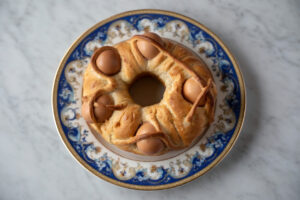
Casatiello is more than a savory bread. It also carries strong Easter symbolism. One of its most recognizable features is the whole eggs placed on top of the dough. Bakers secure them with small strips of dough before baking.
These eggs represent rebirth, renewal, and the resurrection, themes closely linked to Easter.
Bakers usually shape the bread into a ring. Many people see this shape as a symbol of the cycle of life or eternity. When the loaf comes out of the oven, golden and fragrant, the eggs sit in the crust like small decorations. The result is both beautiful and meaningful.
In many homes in Naples, families prepare Casatiello on Good Friday or Holy Saturday. Everyone gathers in the kitchen to knead the dough. They mix in cubes of salami and cheese and place the eggs on top before baking.
Families usually serve the bread on Easter Sunday. Many also bring it to outdoor picnics on Easter Monday, known in Italy as Pasquetta. Thick slices are perfect for sharing with friends and relatives.
A Bread That Tells a Story
Casatiello reflects the spirit of southern Italian cooking. It uses simple ingredients and transforms them with time, patience, and tradition. Every slice carries a sense of celebration after sacrifice.
Even today, families in Naples and around the world still bake this bread at Easter. Casatiello shows how food can hold memory, culture, and tradition in every bite.
Typical Ingredients for Casatiello
Dough

All-purpose flour or bread flour
Warm water or milk
Active dry yeast or fresh yeast
Lard (traditional fat used in Neapolitan recipes)
Salt
Black pepper
Filling
Salami or Italian cured meats (such as soppressata or pancetta)
Cubed cheeses such as provolone, pecorino, or scamorza
Grated pecorino or parmesan cheese
Topping
Whole eggs in their shells (placed on top of the dough before baking)
Small strips of dough to secure the eggs
The traditional ingredients of Casatiello reflect the rich and hearty cooking style of Naples and the surrounding Campania. This savory Easter bread is known for its simple dough enriched with flavorful fillings such as cheeses and cured meats. What makes Casatiello distinctive is the generous use of black pepper and cheese, which gives the bread a bold, savory flavor. The cubes of cured meats and cheese melt slightly into the dough during baking, creating pockets of rich flavor in every slice.
Although many modern versions adapt the ingredients, the classic Neapolitan recipe stays close to these traditional elements, preserving the rustic character that has made Casatiello a staple of Easter celebrations in southern Italy.
Ingredients
Equipment
Instructions
- Activate the yeastIn a small bowl, combine warm water, sugar, and yeast. Let it sit for 5–10 minutes until foamy.
- Prepare the doughIn a large mixing bowl, combine flour, salt, and black pepper.Add the yeast mixture and lard.Mix until a rough dough forms.
- KneadKnead the dough for 8–10 minutes by hand (or 6 minutes with a stand mixer) until smooth and elastic.
- First risePlace the dough in a lightly greased bowl. Cover and let it rise in a warm place for about 2 hours, or until doubled in size.
- Add the fillingPunch down the dough and flatten it into a rectangle. Sprinkle the diced salami, provolone, and grated pecorino evenly over the dough.Roll the dough tightly into a log, distributing the filling as you roll.
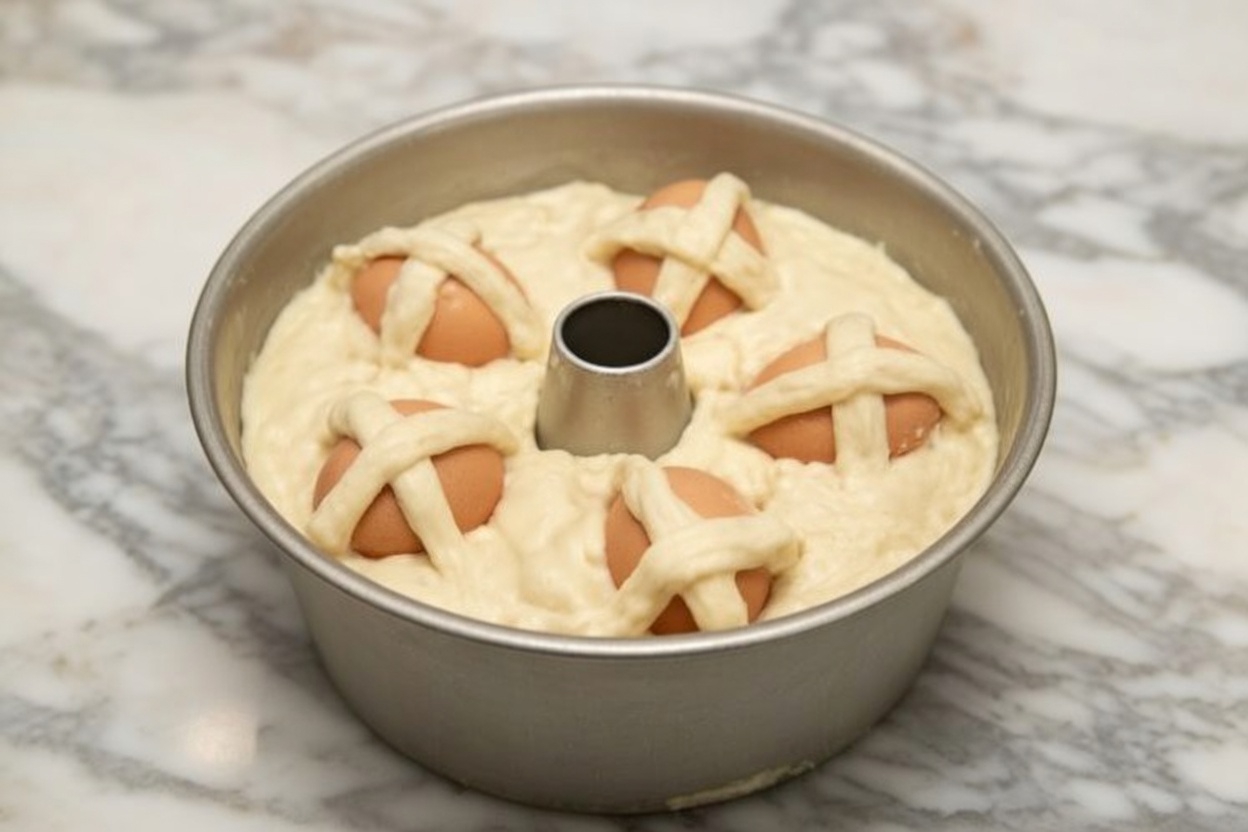
- ShapeForm the log into a ring and place it in a greased bundt or tube pan.
- Add the eggsWash and dry the eggs. Place them evenly on top of the dough.Use thin strips of dough to form a cross over each egg to hold them in place.
- Second riseCover the pan and allow the dough to rise again for 45 minutes.
- BakePreheat the oven to 350°F (175°C).Bake for 45–50 minutes, until golden brown and cooked through.
- Cool and serveAllow the bread to cool for 20 minutes before removing from the pan. Slice and serve warm or at room temperature.
Notes
Nutrition Estimated Facts
Casatiello (Italian Easter Bread)
Casatiello per serving – 1/8 loaf)
| Nutrient | Amount | %DV |
|---|---|---|
| Calories | 420 | 21% |
| Total Fat | 19 g | 24% |
| Saturated Fat | 7 g | 35% |
| Cholesterol | 115 mg | 38% |
| Sodium | 720 mg | 31% |
| Total Carbohydrates | 42 g | 15% |
| Dietary Fiber | 2 g | 7% |
| Total Sugars | 1 g | — |
| Added Sugars | 0 g | 0% |
| Protein | 18 g | 36% |
Tried this recipe?
Let us know how it was!Serving Casatiello
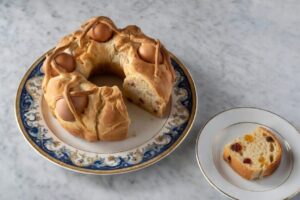
Casatiello is best served slightly warm or at room temperature, when the bread is soft and the flavors of the cheese and cured meats are fully developed. Slice the loaf into thick wedges so each piece includes some of the savory filling and a portion of the crust.
In Naples, families traditionally serve Casatiello during Easter Sunday lunch as part of a large holiday table.
It pairs beautifully with simple foods like fresh salads, roasted vegetables, olives, and additional cured meats.
The bread is also perfect for picnics and casual gatherings. Many people enjoy it the next day during Pasquetta, when friends and families head outdoors with baskets of homemade foods. Thick slices of Casatiello are easy to pack and delicious on their own, making them a favorite for springtime picnics.
Storage
Room Temperature (Best for Short Storage)
Once the bread has completely cooled, wrap it tightly in plastic wrap or aluminum foil, or place it in an airtight container. It can be stored at room temperature for up to 2 days. Keeping it well wrapped helps prevent the bread from drying out.
Refrigerator
Because Casatiello contains eggs, cheese, and cured meats, some people prefer to refrigerate it. Store it in an airtight container or wrap it tightly and keep it in the refrigerator for up to 4–5 days. Before serving, you can bring slices to room temperature or warm them slightly in the oven.
Freezing
Casatiello freezes very well. Slice the bread first for easier portions, then wrap each slice (or the whole loaf) tightly in plastic wrap and place it in a freezer-safe bag. It can be frozen for up to 2 months.
To serve, thaw overnight in the refrigerator and warm in the oven at 300°F (150°C) for about 10–15 minutes to refresh the texture.
Serving leftovers
Leftover slices are excellent lightly toasted or served during picnics and gatherings, a tradition often associated with Pasquetta in Italy.