Sardinia’s Iconic Fried Cheese With Honey Dessert
Some desserts surprise you from the very first bite. Seadas is one of them. It looks simple—a golden, puffy pastry topped with glossy honey—but the moment you cut into it, the magic starts. Warm cheese stretches like a guilty pleasure. A soft citrus aroma rises. Suddenly, you understand why Sardinians have cherished this treat for generations.
Seadas makes you pause mid-bite. It feels rustic yet elegant, comforting yet surprising. The dough comes from semolina and olive oil. Nothing fancy. But it fries into a crisp, beautiful shell. Inside, the pecorino turns warm and stretchy. It tastes sharp and salty, but the honey softens each bite. This dessert has personality. Bold. Honest. Unforgettable.
Seadas: A Shepherd’s Meal Turned Iconic Dessert
The story of Seadas begins far from busy kitchens. Picture Sardinia’s rugged interior—rolling hills, twisted olive trees, and shepherds moving their flocks through ancient pastures. These shepherds lived off simple ingredients: fresh pecorino they made themselves, flour they carried, lemons from nearby groves, and honey gathered from wild blooms.

Seadas didn’t start as a dessert. Shepherds made it as a savory, filling meal to fuel long days outside. They softened the cheese over heat, wrapped it in dough, and fried it. The dish was practical and satisfying, built entirely from what the land offered.
Then something changed. Maybe it happened during a feast. Maybe someone drizzled honey over a hot Seada just to experiment.
Whatever the moment, it transformed everything. Sweetness met melted cheese, and the dish shifted from hearty meal to beloved treat. Families began serving Seadas during Easter and special gatherings. Each home added its own twist, and the tradition grew stronger.
The charm of Seadas lives on today. Many Sardinians can point to the version they grew up with—sharper cheese, softer cheese, or the ones eaten straight from the pan on Sunday afternoons. It’s more than a recipe. It’s a memory passed from kitchen to kitchen.
Now, Seadas stands as a symbol of Sardinia itself. Simple ingredients. Deep roots. A flavor that feels ancient yet fresh. Every bite tells a story.
Typical Ingredients
Seadas use simple, rustic ingredients that reflect Sardinia’s pastoral life. Each one plays a key role in the pastry’s bold flavor and crisp texture.
Dough
Semolina flour – Gives the dough structure and that signature chewy bite.
All-purpose flour (optional) – Lightens the dough slightly.
Olive oil – Adds richness and helps the dough fry beautifully.
Warm water – Brings the dough together and keeps it soft.
A pinch of salt – Enhances the flavor.
Filling
Fresh pecorino cheese – The star ingredient. It melts into a creamy, stretchy center.
Lemon zest – Adds a bright, fragrant note that cuts through the richness.
A touch of sugar (optional) – Balances sharper pecorino varieties.
Frying and Serving
Olive oil or neutral frying oil – Heats quickly and creates a crisp, golden shell.
Sardinian wildflower honey (or any floral honey)
The most traditional version of sebadas takes a little time, but it’s the one that feels closest to Sardinia’s roots. Picture a big, rustic round of semolina dough enriched with lard, almost like a hearty hand-pie. Inside, there’s a filling of tangy, slightly aged Sardinian pecorino mixed with bright lemon peel. You drop it into hot oil, and it bubbles and puffs until the outside turns beautifully golden. When it comes out, you finish it the way Sardinians have for generations with a generous drizzle of honey or a light dusting of powdered sugar. Simple, bold, and incredibly comforting.
Ingredients
Instructions
- In a large bowl, mix semolina, all-purpose flour, and salt.
- Add olive oil. Rub it into the flour with your fingers.
- Pour in warm water a little at a time. Mix until a soft, smooth dough forms.
- Knead for 5–6 minutes until elastic.
- Cover the dough and let it rest for 20 minutes.
- Add the grated pecorino to a saucepan.
- Warm it gently over low heat for 1–2 minutes—just enough to soften (not melt).
- Stir in the lemon zest and sugar (if using).
- Mix into a cohesive paste.
- Let it cool slightly so it firms up.
- Divide the dough into 2 equal portions.
- Roll each portion into a thin sheet (about 1/8 inch or 3 mm thick).
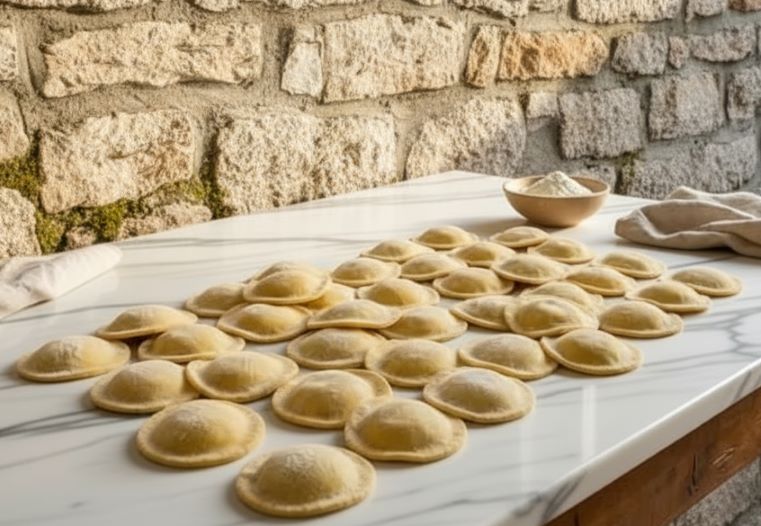
- Using a round cutter, cut 24 circles (12 pairs).
- Place a small mound of cheese filling in the center of 12 circles.
- Cover each with a second dough circle.
- Press out air, seal the edges well, and crimp with a fork.
- Make sure the edges are tight so the cheese doesn’t escape while frying.
- Heat oil in a deep pan over medium heat.
- When hot, gently lower 1–2 Seadas at a time into the oil.
- Fry for 1–2 minutes per side, until golden and puffed
- Remove and drain on paper towels.
- Drizzle warm Seadas generously with honey. Serve immediately while the cheese is still soft and stretchy.
Notes
Nutrition Estimated Facts
Authentic Sardinian Seadas
Traditional Sardinian per serving (≈150 g ≈ 1 seada)
| Nutrient | Amount (per ~150 g) | % Daily Value (DV) |
|---|---|---|
| Calories | ~480 kcal | 24% |
| Total Fat | ~19 g | 25% |
| Saturated Fat | ~11.4 g | 57% |
| Cholesterol | ~75–90 mg | — |
| Sodium | ~1.9 g | 32% |
| Total Carbohydrate | ~53 g | 19% |
| Dietary Fiber | ~1.5 g | 6% |
| Total Sugars | ~12 g | — |
| Added Sugars | ~10–12 g | 20–24% |
| Protein | ~24 g | 48% |
Tried this recipe?
Let us know how it was!Serving
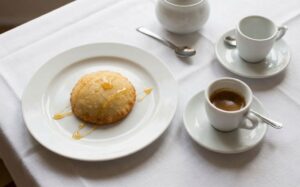
Seadas enjoyed across the island during holidays, family gatherings, and Sunday meals. Serve them hot, eat them slowly, and savor every bite of this iconic Italian dessert.
Seadas taste their best the moment they come out of the pan, hot, crisp, and still carrying that soft stretch of melted pecorino inside.
Place them on a warm plate and drizzle plenty of honey over the top. The heat from the pastry gently thins the honey, letting it seep into the edges and create the perfect sweet–salty balance. If you like a lighter touch, add just a thin thread of honey and let the cheese shine. For a sweeter finish, dust them with powdered sugar instead. Serve one or two per person, they’re rich but irresistible.
Enjoy Seadas on their own, or pair them with a small glass of dessert wine or even a simple espresso. No matter how you serve them, bring them to the table warm, they’re all about that first melty bite.
Storage
Seadas are at their best when they’re hot and fresh, but they store and freeze surprisingly well with the right steps.
Uncooked Seadas: If you’ve already shaped them, place each one on a parchment-lined tray. Cover lightly and keep them in the fridge for up to 24 hours. They stay firm and fry perfectly the next day.
Cooked Seadas: If you have leftovers, store them in an airtight container in the refrigerator for up to 2 days. They’ll soften slightly, but a quick reheat brings them back to life.
Freezing: Freezing works beautifully, especially for uncooked Seadas.
Freeze uncooked:
Arrange them on a tray in a single layer. Freeze until solid.
Transfer to a freezer bag or container. Freeze for up to 2 months.
Cook from frozen: Fry them straight from the freezer, no thawing. Just add 1 extra minute per side to make sure the center melts.
Freeze cooked Seadas:: Wrap them individually and freeze for up to 1 month. Reheat in a hot oven until crisp and warm.
Reheating: Warm cooked Seadas in a 375°F (190°C) oven for 6–8 minutes. Avoid microwaving, they lose their crisp texture.