Classic Italian Christmas Cake – Pandoro
Pandoro is one of those holiday bakes that feels like pure magic the moment you open the box. A cloud-soft, star-shaped cake dusted in snowy vanilla sugar, simple, elegant, and unmistakably Italian. It’s the kind of dessert that instantly brings you back to bustling Christmas markets, Nonna’s kitchen lights glowing, and that joyful flurry of wrapping paper and clinking espresso cups.
Unlike many traditional Italian sweets that rely on nuts, honey, or spices, Pandoro celebrates butter, eggs, and simplicity. It’s delicate, fragrant, and impossibly fluffy almost like a cross between brioche and cake. Slice it, toast it, fill it, layer it. Pandoro is a blank canvas that still somehow feels luxurious all on its own.
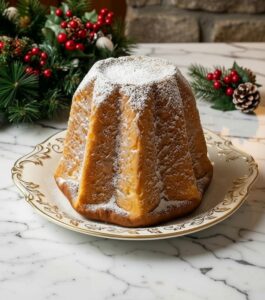
Pandoro Is Loved During the Holidays
Pandoro’s story begins in Verona, the romantic northern Italian city best known as the home of Romeo and Juliet. The name literally means “pan d’oro,” or “golden bread,” a nod to its rich yellow crumb. But this golden hue wasn’t just for looks, historically, it reflected wealth. In centuries past, sugar, butter, and eggs were expensive ingredients. A bright, buttery cake on your Christmas table was a sign of celebration and good fortune. The aroma alone, warm butter, vanilla, and a hint of citrus lets you know Christmas is close.
The modern version of Pandoro traces back to the late 1800s, when Domenico Melegatti, a Veronese pastry maker, secured an official patent for the iconic star shape and long, slow-risen dough. He refined older holiday breads from the region, stripping away spices and dried fruit to let the pure flavor shine. His technique relied on multiple rises, patient kneading, and plenty of butter an approach that created the ultra-light texture Pandoro is now famous for.
Since then, Pandoro has become a must-have across Italian households during the holidays. Families debate team Panettone vs. team Pandoro. Kids shake the sugar bag to “snow cap” the cake. Adults sneak slices for breakfast with cappuccino. The tradition is simple but deeply loved—exactly what Italian Christmas should feel like.
Typical Ingredients
Pandoro looks simple, but its ingredients are chosen with care. Each one plays a role in creating that soft, golden crumb and delicate holiday aroma.
(Biga) pre-fermented Italian dough
All-purpose flour
Milk
Sugar
Yeast active dry
Dough
All-purpose flour
Sugar
Eggs
Vanilla extract
Butter
Salt
Lemon zest (optional)
Finishing
Butter
Powdered sugar
Vanilla sugar (sugar mixed with vanilla extract optional)
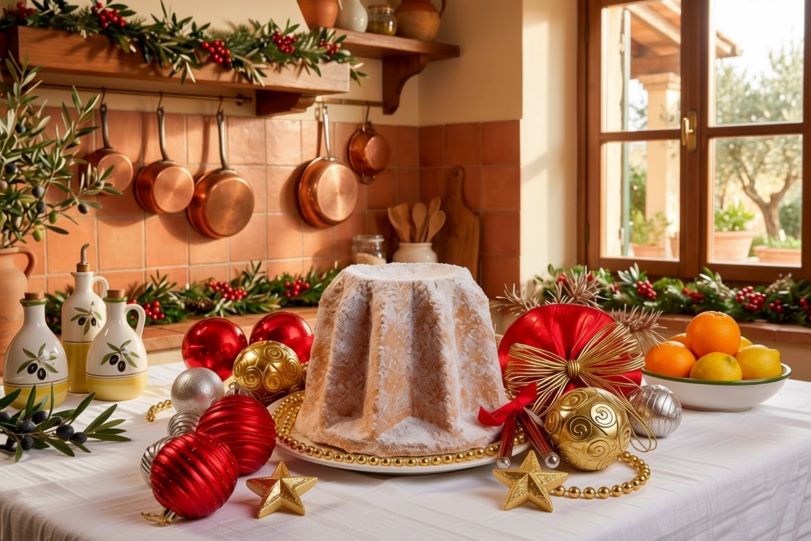
Ingredients
Equipment
Instructions
- In a bowl, combine warm milk, sugar, and yeast. Let it rest until foamy, about 10 minutes.Mix in the flour.Cover and let rise for 1 hour, or until puffy and doubled.
- Add the biga to your mixer bowl.Add flour, sugar, eggs, yolks, vanilla, lemon zest, and salt.Mix on low until combined, then on medium until smooth.Slowly add the softened butter, 1 tablespoon at a time.Keep mixing until the dough is glossy, stretchy, and pulls from the sides (10–15 minutes). The dough should feel slightly tacky but extremely elastic.
- Transfer dough to a lightly buttered bowl.Cover tightly.Let it rise overnight in the fridge, or 4–5 hours at room temp until doubled.
- Turn chilled dough onto a floured surface.Gently knead in the softened butter until fully absorbed.Shape into a smooth ball.
- Butter the Pandoro mold generously.Place dough inside, seam-side down.Cover and let rise until the dough reaches the top of the mold (3–6 hours).
- Heat oven to 350°F (175°C).Bake 35–40 minutes.If top browns too quickly, tent with foil.Cake is done when a thermometer inserted reads 190°F (88°C).
- Let cake cool in mold for 15 minutes.Turn out onto a rack and cool fully.Place cake in a bag with powdered sugar and shake to make the signature “snow-dusted” finish.
Notes
Nutrition Estimated Facts – Pandoro
Serving Size: ~1 slice (80g)
| Nutrient | Amount | % Daily Value* |
|---|---|---|
| Calories | ~300 kcal | — |
| Total Fat | 14 g | 18% |
| Saturated Fat | 8 g | 40% |
| Cholesterol | 70 mg | 23% |
| Sodium | 150 mg | 7% |
| Total Carbohydrates | 38 g | 14% |
| Dietary Fiber | 1 g | 4% |
| Added Sugars | 18 g | — |
| Protein | 6 g | 12% |
| Calcium | 60 mg | 6% |
| Iron | 1 mg | 6% |
Tried this recipe?
Let us know how it was!Flavor Variations
Vanilla Bean & Honey Pandoro
Split a vanilla bean and scrape the seeds directly into the dough, then whisk 1 tablespoon of honey into the eggs before mixing. The result is deeper, warmer, and naturally fragrant.Orange Creamsicle Pandoro
Add the zest of one orange plus 1 teaspoon of orange extract. After baking, drizzle a thin orange-vanilla glaze over the top. Bright, sunny, and perfect for winter mornings.
Chocolate Marble Pandoro
Right before placing the dough in the mold, fold in ½ cup melted dark chocolate. Swirl gently so ribbons of chocolate run through the golden crumb.
Cinnamon Sugar Holiday Pandoro
Mix 1 teaspoon cinnamon and ¼ teaspoon nutmeg into the flour. Dust the finished cake with cinnamon-sugar instead of plain powdered sugar for warm, spiced holiday flavor.
Almond Pandoro
Add ½ teaspoon almond extract to the dough and sprinkle toasted sliced almonds on top right after dusting. The almond aroma pairs beautifully with the soft, buttery crumb.
Lemon Limoncello Pandoro
Add zest of two lemons and replace 1 tablespoon of milk with limoncello. After baking, brush a thin limoncello syrup over the warm cake. Light, bright, and grown-up.
Chocolate Chip Pandoro
Fold ¾ cup mini chocolate chips into the dough after kneading. Kids love it, and it tastes amazing with warm espresso.
Pistachio Cream Center
Cut a small hole into the base and pipe in sweet pistachio crema until the inside is filled. A popular Sicilian twist that adds richness and color.
Nutella Lava Pandoro
Before the final rise, tuck a small frozen scoop of Nutella into the center of the dough ball. As it bakes, it melts into a gooey chocolate core. Pure heaven.

Serving
There’s something comforting about bringing a Pandoro to the table. It’s simple, golden, and instantly festive, the kind of treat that invites everyone to slow down and enjoy a moment together. Slice it thick and dust it with powdered sugar, warm it just enough to release the butter and vanilla, or dress it up with mascarpone, chocolate drizzle, or fresh berries.
However, Pandoro always feels like a little celebration. Making it at home takes time, but the payoff is worth every rise and fold. It’s a tradition that fills the house with warmth and gives the holiday season one more reason to smile.
Storage
Slice and Serve with a Dusting of Powdered Sugar: The simplest and most traditional way. Thick slices, a snowfall of vanilla sugar, and an espresso on the side—just like Christmas morning in Italy.
Warm It Up for Extra Softness: A quick 5–10 seconds in the microwave or a light toast in the oven brings the butter and vanilla to life. Warm Pandoro practically melts on your tongue.
Keep your cookies fresh with a few simple steps. Once completely cooled, place them in an airtight container at room temperature. They stay soft and flavorful for 4–5 days. If you’re stacking them, add a small piece of parchment between layers to protect the glaze or sugar coating.
For longer storage, freeze the cookies in a tightly sealed container or freezer bag for up to 2 months. Thaw at room temperature, uncovered, so any excess moisture evaporates and the texture stays true to how they were baked.
If the cookies include a glaze, it’s best to let the glaze harden fully before storing or freezing to avoid sticking.